
About
Amethyst
Amethyst, the purple variety, is the most popular and valuable Quartz gemstone. Amethyst ranges from light to dark purple. See the Amethyst gemstone page for more details.
Citrine
Citrine is the yellow, orange, or reddish-brown variety of Quartz. It is usually colored by heat treatment of Amethyst or Smoky Quartz. Light yellow or lemon yellow Citrine is often called Lemon Quartz in the gem trade. See the Citrine gemstone page for more details.
Smoky Quartz
Smoky Quartz is the brown "smoky" variety of Quartz. It ranges in color from light brown to black. Despite its dark color, it is rarely opaque. See the Smoky Quartz gemstone page for more details.
Rose Quartz
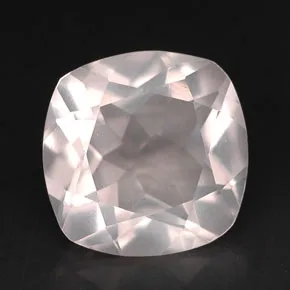
The rosy pink variety of Quartz is known as Rose Quartz, and its color is usually soft, ranging from very light pink to medium pink in intensity. Rose Quartz is often milky or hazy, and it may lack good transparency. See the Rose Quartz gemstone page for more details.
Rock Crystal
The colorless, transparent variety of Quartz, free of any impurities, is known as "Rock Crystal". Flawless and very large cuts may be cut from Rock Crystal.
Milky Quartz
Milky Quartz is the white, translucent to opaque variety of Quartz. Though very common in nature, it is not used as a gemstone.
Rutilated Quartz
Colorless Quartz with golden yellow Rutile inclusions, as hairlike growths within the gemstone, are known as Rutilated Quartz. See the Rutilated Quartz gemstone page for more details.
Ametrine
Ametrine is an interesting, color-zoned combination of purple Amethyst and brownish-yellow Citrine. See the Ametrine gemstone page for more details.
Prasiolite / Green Quartz
Prasiolite, or Green Quartz, describes a light green Quartz artificially colored by heat treatment of certain types of Amethyst. May also be called "Green Amethyst" by some jewelers.
Blue Quartz
The blue variety of Quartz, which is uncommon in nature, is seldom used as a gemstone. Most "Blue Quartz" is clear Rock Crystal irradiated with gold to from a deep sky blue color. Blue Quartz may also refer to a dull grayish-blue Quartz in massive form with Crocidolite inclusions.
Tourmalinated Quartz
Colorless Quartz with Tourmaline inclusions, often as thin long black crystals, is known as "Tourmalinated Quartz".
Cat's Eye Quartz
Cat's Eye Quartz is Quartz with dense, tiny Rutile inclusions that cause a cat's eye effect. It is not common, and the chatoyant effect is usually weak. Cat's Eye Quartz is usually grayish in color and translucent.
Advertisement
Uses
Varieties
✓ generally accepted · ✗ less commonly used
- Amethyst— Purple variety of Quartz, and its most popular and valuable gemstone variety. (See the Amethyst gemstone page for more details.) Tumbled Amethyst with white Milky Quartz is sometimes known as Amethyst Quartz.
- Ametrine— A rare multicolored variety of Quartz with purple and yellow highlights, essentially a combination of Amethyst and Citrine in a single stone. (See the Ametrine gemstone page for more details.)
- Aventurine— Opaque, compact Quartz / Chalcedony containing small Mica, Hematite, or Goethite scales which cause a glistening effect. Aventurine is most often green but may also be other colors such as gray, orange, and brown.
- Citrine— The yellow, orange, or reddish-brown variety of Quartz. Its color is usually created by heat treatment of Amethyst or Smoky Quartz. (See the Citrine gemstone page for more details.)
- Rose Quartz— Pink variety of Quartz. (See the Rose Quartz gemstone page for more details.)
- Rutilated Quartz— Colorless Quartz with golden yellow Rutile inclusions that form hairlike growths within the gemstone. (See the Rutilated Quartz gemstone page for more details.)
- Smoky Quartz— Brown to black variety of Quartz. (See the Rutilated Quartz gemstone page for more details.)
- Blue Quartz— Rare natural blue variety of Quartz. It is caused by inclusions of blue minerals, especially Dumortierite. Most "Blue Quartz" is what is popularly known as "Aqua Aura", essentially clear Rock Crystal synthetically irradiated with gold to form a deep sky blue color. Blue Quartz may also refer to a dull grayish-blue Quartz in massive form with Crocidolite inclusions.
- Cat's Eye Quartz— Quartz with dense, tiny Rutile inclusions that cause a cat's eye effect. Cat's Eye Quartz is not common, and the chatoyant effect is usually weak. Cat's Eye Quartz is usually grayish in color and translucent.
- Lemon Quartz— Lemon Quartz is a light to dark yellow Citrine, distinguished from most Citrine by lacking orange, brown, or reddish tints. More often though it is clear Quartz that is irradiated to produce an intensely colored yellow gemstone. Lemon Quartz has recently experienced a popularity increase in the gemstone market.
- Milky Quartz— White, translucent to opaque variety of Quartz. It is not commonly used as a gemstone.
- Prase— Light to emerald green, transparent to translucent Quartz / Chalcedony, with coloring caused from inclusions of green minerals, such as Actinolite, Hedenbergite, Chlorite, or Malachite.
- Prasiolite— Light green gem form Quartz artificially colored by heat treatment of certain types of Amethyst. May also be called Green Amethyst by some jewelers.
- Rock Crystal— The colorless, transparent variety of Quartz, free of impurities is called "Rock Crystal".
- Strawberry Quartz— Quartz with vein-like red iron oxide inclusions.
- Tourmalinated Quartz— Quartz with splintery Tourmaline inclusions.
Treatments & Enhancements
Certain colorful Quartz types not found in nature are produced through irradiation. Some forms of Quartz with a multicolored rainbow effect are synthetically treated to produce their color effect using film deposition. The process involves bonding an extremely thin metallic film layer over the top of the gemstone, so that the interesting color effects are reflected from the crown. Some vividly colorful forms of Quartz are synthetic grown using the hydrothermal method.
Sources
Similar Gemstones
Rock crystal is similar to glass, but the softness of glass usually lends it to scratches and soft etches which are lacking on Rock Crystal. Rock Crystal is rarely cut into small facets, so it usually is not a concern of confusion to other colorless gems such as Diamond, White Topaz, and White Sapphire. These white gemstones will also have a greater dispersion and exhibit more fire.