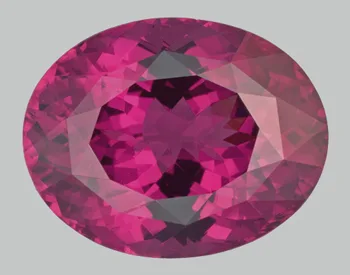
Rhodolite describes a rose-red form of Garnet that has a lighter tone and more purplish color than typical Garnet gemstones. It is usually an intermediary variety between the Pyrope and Almandine series, usually containing more magnesium than iron in its chemical structure, thus leaning closer towards Pyrope. It is often regarded as a variety of Pyrope.
About
Rhodolite has quickly grown into a standard jewelry gemstone. It has an attractive color, and is often very clean being without any flaws and inclusions. Rhodolite is generally a lighter in color then Pyrope and Almandine Garnets, and often comes in purplish tints not present in other red Garnets. The name Rhodolite is not a scientific term, and this form of Garnet is not recognized as an individual mineral species. Despite this, the term is used and accepted in the gemstone industry. In the trade it can be called either Rhodolite Garnet, or simply just Rhodolite. The origin of the name is from the Greek word, "rhodon", meaning rose, alluding to its color.
Advertisement
Uses
Rhodolite is used in all forms of
jewelery, especially rings, earrings, and pendants. It is also polished into cabochons and beads for use in bracelets
and necklaces, and may be tumbled into smooth irregular
stones for jewelry.
Treatments & Enhancements
Garnet gemstones, including Rhodolite, are not enhanced, and their colors are always natural.
Sources
Rhodolite sources include Tanzania, Mozambique, Sri Lanka, Brazil, and the U.S. (North
Carolina).
Similar Gemstones
Rhodolite is usually a lighter tint then the similar Almandine and PyropeGarnets. It can be similar toRuby, though Ruby is harder and usually lacks the violet hue. Spinel and RubelliteTourmaline can also closely resemble Rhodolite. Amethyst is a more pure purple color, lacking the reddish color.