
About
Amber has a very low specific gravity, and is one of the lightest of gemstones. Although it will not float in water, it may float in saltwater which has a higher density. Baltic Amber is sometimes found with sand on the beach, having been washed ashore from the seabed, especially after storms.
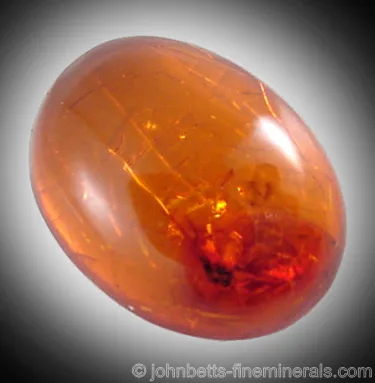
Amber can be completely transparent, though most forms are cloudy and translucent. The cloudiness is usually caused by trapped air bubbles, which are very small and dense, but can cloud up the entire Amber. Amber with clearer transparency is more valuable than cloudy specimens. In general, Dominican Amber is usually more transparent than other Amber, and also frequently contains insect inclusions. Dominican Amber is also strongly fluorescent, both in longwave and shortwave.
Amber is very soft for a gemstone, and is not very durable. Aside from its tendency to easily scratch, it is adversely affected by chemicals and solutions, and should be kept away from alcohol, perfume, gasoline, acids, or any solvents. Amber will also burn if exposed to fire, and can crack under too much heat or pressure.
Advertisement
Uses
Varieties
✓ generally accepted · ✗ less commonly used
- Baltic Amber— Amber from the vicinity of the Baltic Sea, mainly near the coastline of Latvia, Lithuania, Russia (in Kaliningrad Oblast - an isolated Russian Province in the Baltics), and northern Poland. The world's largest Amber reserves exist in this area, and some of the material washes up directly from the Baltic Sea onto the shore.
- Blue Amber— Rare form of Amber from the Dominican Republic (Dominican Amber) with a characteristic blue and yellow color that changes to all yellow when viewed directly into light.
- Copal— Hardened resin that has partially gone through the polymerization process to harden it, but is not fully polymerized like Amber.
- Dominican Amber— Amber from the Dominican Republic.
- Amberoid— Synonym of Pressed Amber
- Bony Amber— Cloudy, translucent Amber containing dense inclusions of bubbles throughout its interior.
- Burmite— Amber originating from Burma (Myanmar).
- Pressed Amber— Larger pieces of Amber created by compressing resin pieces or small Amber fragments into a single mass at high temperatures.
- Simetite— Amber from the island of Sicily, Italy.
Treatments & Enhancements
Sources
The Dominican Republic is another significant source of Amber. The enigmatic Blue Amber variety is mined in Santiago Province. Other sources of Amber are Germany, Italy (Sicily), Burma (Myanmar), Mexico, Canada, and the U.S. (Arkansas and New Jersey).